Asphalt Crack Filling

Asphalt and Pavement Crack Filling by Summit Stripe

Why Crack Filling is Your Pavement’s Best Defense

Think of a crack in your asphalt like a cavity in a tooth. If you ignore it, it doesn’t just stay the same- it grows, weakens the structure, and eventually leads to a very expensive “root canal” (or in this case, a total repave).

Crack filling is the single most cost-effective maintenance task you can perform. Here is why it’s non-negotiable for your property:

1. It Stops Water in Its Tracks
Water is the arch-nemesis of asphalt. When rain or melting snow enters a crack, it seeps down into the sub-base (the foundation). This softens the ground underneath, leading to:

Potholes: The asphalt collapses into the weakened base.
Alligator Cracking: Interconnecting cracks that look like scales and signify structural failure.

2. The Freeze-Thaw Cycle
In colder months, water trapped in those cracks freezes and expands. This internal pressure forces the crack to widen and can heave the asphalt upward. By sealing cracks early, you prevent moisture from ever getting a foothold.

3. Prevents Vegetation Growth
Ever see weeds growing out of a driveway? Those roots are incredibly strong. As they grow, they push the asphalt apart from the inside out, destroying the smooth surface and creating trip hazards.

4. Massive Long-Term Savings
The math is simple: Crack filling costs pennies per linear foot, while a full asphalt overlay costs dollars per square foot. Regular maintenance can double the lifespan of your pavement, delaying the need for a total replacement by years—if not decades.

5. Instant Curb Appeal
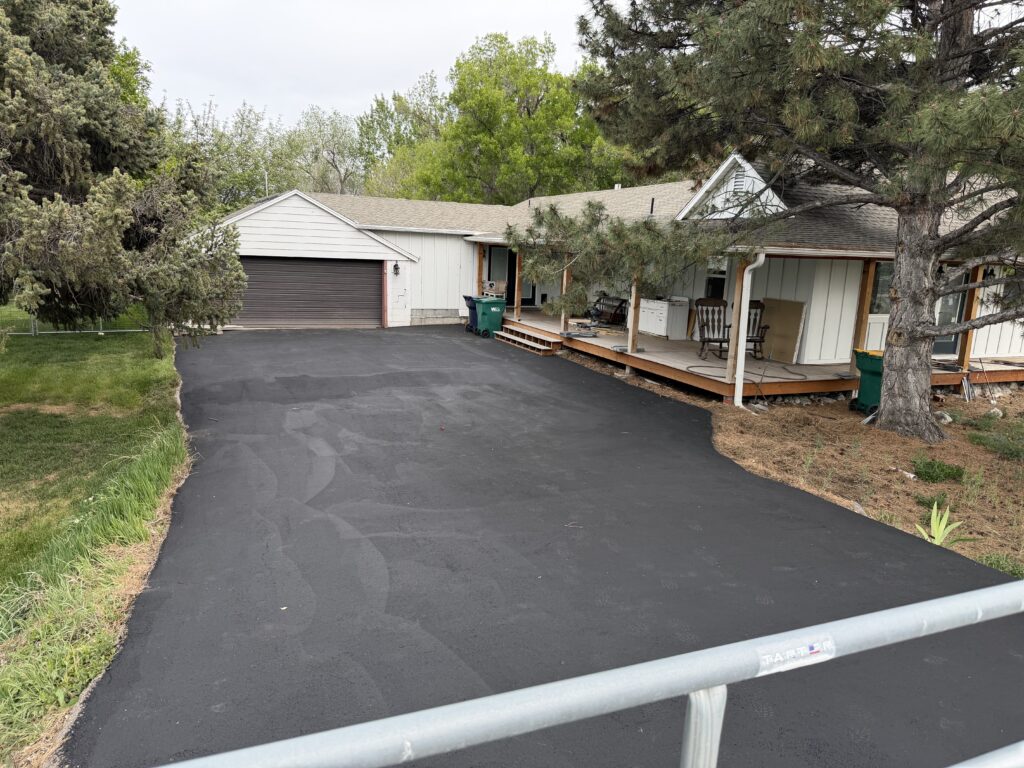
Cracks make a property look neglected. Freshly filled cracks, especially when followed by a professional sealcoat, give your driveway or parking lot a clean, “like-new” appearance that boosts property value immediately.

While it might look like just “pouring liquid into a gap,” professional crack filling is a technical process. At Summit Stripe, we follow a rigorous multi-step method to ensure the sealant bonds permanently and withstands the elements.

Step 1: Deep Cleaning & Preparation

A sealant is only as good as its bond. If we pour material over dirt, sand, or grass, it will peel up within a season.

  • Debris Removal: We use high-pressure air wire wheels or “heat lances” to blow out dirt and vegetation.
  • The Goal: A clean, dry, and firm surface that allows the sealant to “bite” into the asphalt walls.

Step 2: Proper Sizing (Routing)

Optional/High-End Service: For larger commercial jobs or specific residential needs, we may route the crack. This involves using a machine to create a uniform “reservoir” for the sealant, ensuring it has enough volume to expand and contract without breaking.

Step 3: High-Heat Material Preparation

We don’t use “cold patch” tubes from a hardware store. We use industrial-grade, rubberized asphalt sealant heated to approximately 190°C in a specialized kettle.

  • Flexibility: This hot-pour method ensures the material remains flexible. It will stretch in the winter and compress in the summer without cracking.

Step 4: Precision Application

Using a “V-shaped” squeegee or a pressurized wand, we apply the molten sealant directly into the crack.

Leveling: We ensure the finish is flush with the pavement to prevent snowplows or tires from catching the edges.

The Over-Band: We apply a slight “over-band” (a thin strip of sealant overlapping the edges) to create a watertight “bridge” over the gap.